


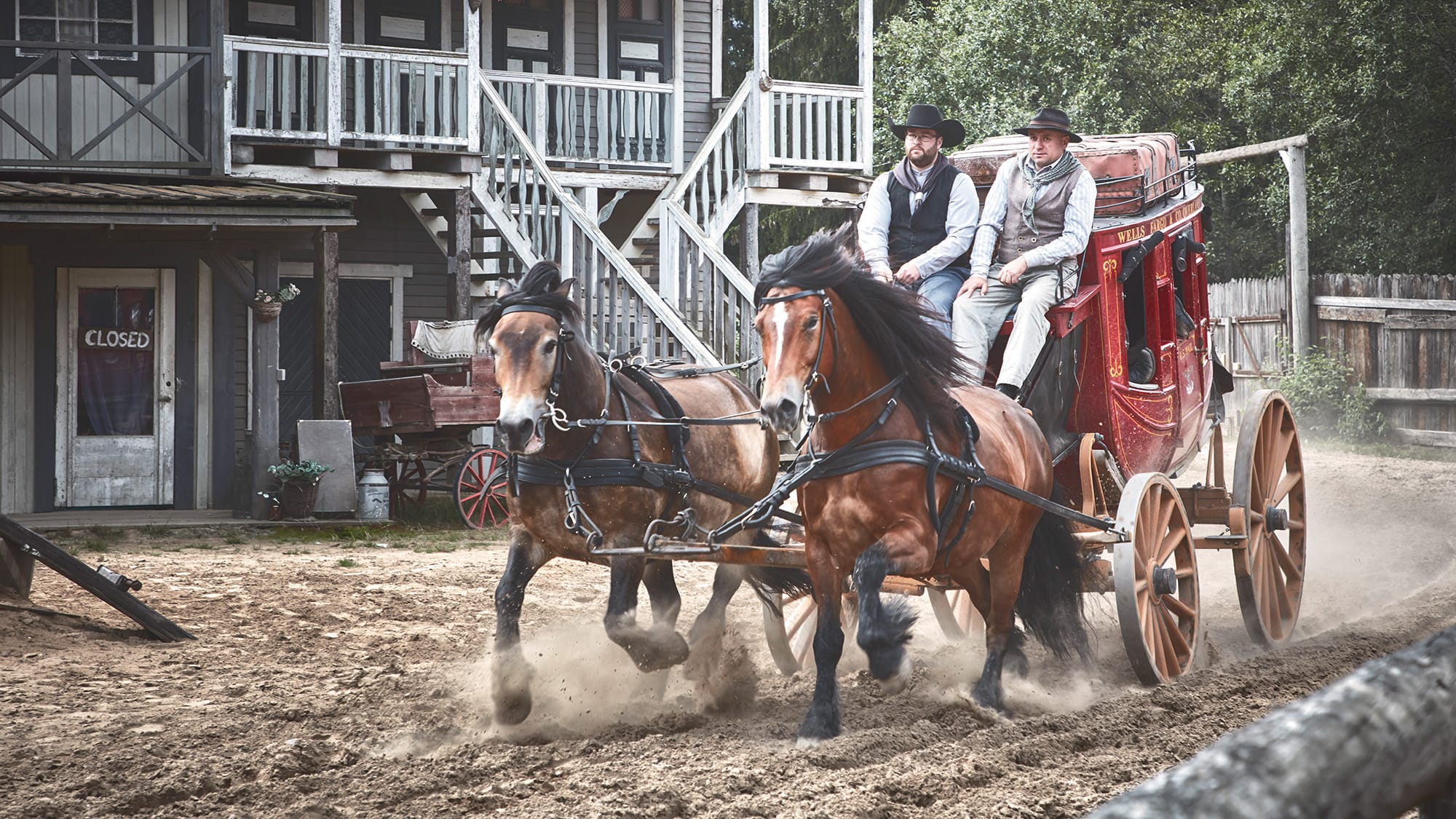


The story of Big Bengt
Bengt Tage Erling Erlandsson, the protagonist of this story, was born on October 10, 1897, in the small village of Brännehylte in Småland. His parents, Carl and Hildur Erlandsson, ran a forestry business and a sawmill on their farm. Bengt grew up with seven siblings in a childhood filled with play and mischief, but also hard work. His parents worked hard in the forest and running the farm and sawmill, and the children had to help with the chores from an early age.
For Bengt, the dream of America comes early. Life in the Småland countryside in the 1890s is marked by poor harvests and poverty, and many Smålanders choose to seek their fortune on the other side of the Atlantic. Bengt hears these stories as he often sits and listens to the adults' conversations. As soon as visitors arrive at the farm, Bengt sits at the kitchen table with his ears pricked. Here he hears the most fantastic stories about exciting events and life stories. He is particularly fascinated by the stories of the brave Smålanders who emigrated to America. Farmers, foresters, and businessmen who traveled to a foreign country on the other side of the globe to start a new life for their families. Bengt's curiosity grows, and he devours every book he can get his hands on about the settlers of the Wild West, cowboys, and Indians. Somewhere along the way, he developed a dream of one day setting foot on American soil and seeing the pioneer towns with his own eyes.
Bengt’s business spirit showed early. His grandfather Alexander ran a small workshop in Brännehylte, producing brooms and dustpans. Bengt spent nearly every day there, helping out, until he realized he could earn his own money by selling the goods on his way home from school.
By age thirteen, he had saved enough to buy his first bicycle. He loaded it with merchandise and expanded his route. People across the region soon knew the determined young salesman from Brännehylte.
A budding businessman
By the time Bengt finished school, he was already a familiar face in the Gnosjö region, an area soon to become known for its legendary “Gnosjö spirit” of entrepreneurship.
He worked on his family’s farm for a few years before earning a driver’s license and finding work as a milk truck driver in Hillerstorp. He loved the job, the travel, the people, the daily conversations. On one of the farms he met Hillevi, the woman who would become his lifelong partner.
Driving between farms, Bengt often passed scrap piles of metal thrown out by nearby factories. He saw potential where others saw waste, and soon convinced manufacturers to let him take the leftover materials. With a lathe and a planer, he set up a small workshop at home, the start of a long entrepreneurial journey.
In 1949, Bengt and Hillevi were married in Kulltorp Church. They built a house in Brännhylte, where they moved, and had a son, Kent, that same year. Two years later, their son Alf was born.
The Brännehylte factory grew rapidly, and in 1957 Bengt purchased a farm near Store Mosse outside Kulltorp. Isolated in the deep Småland forest, he finally felt he had found something precious: freedom. Freedom to create, to imagine, and to dream without limits ,just like the cowboys he admired.
Did you know?
During his years as an entrepreneur, Big Bengt produced everything from railway barriers and dentist chairs to hospital beds, toasters, office furniture, petrol cans and garden tools.
The American Journey
In 1957, Bengt finally fulfilled his childhood dream. He and Hillevi bought two one-way boat tickets to America and crossed the Atlantic just as many Smålanders had done decades before.
Once there, they bought a car and set off across the vast American landscape. Bengt visited old forts, trading posts and historic sites from the frontier era. He felt inspired, free, even. In America, he believed, no one looked down on anyone who worked hard and succeeded. The American Dream mirrored the values he had grown up with in Småland.
When he returned home, Bengt carried not only stories but a burning idea: What if he could recreate the Wild West in Sweden? Not as a museum — but as a living world where people could feel the same sense of freedom he had felt in America. True to his nature, he told no one. Instead, he quietly began planning.
1965: A vision takes shape.With help from skilled craftsmen, Bengt built a military fort from leftover telephone poles. It began as a place to entertain customers and business associates, complete with a saloon run by Hillevi, a swimming pool, and soon, a Wild West show performed by his stable staff. Word spread quickly. Locals peeked through the palisades to see what the eccentric entrepreneur was up to now. By 1966, Bengt opened the fort to the public. At first it was called Fort Erlandsson, but a few years later he renamed it High Chaparral, inspired by the popular Western TV series. For an entrance fee of 5 kronor, visitors could experience a world far from everyday life, complete with blockhouses, saloons, spotted Appaloosa horses and even a Finnish smoke sauna.
Did you know?
In 1972, Bengt was named an honorary citizen of Tucson, Arizona, in recognition of his work bringing the spirit of the American West to Sweden.
A town rises from the forest
High Chaparral grew fast. Bengt never stood still, as soon as one project began, he was already planning the next. Western Street soon appeared, complete with a bank, saloon and sheriff’s office, becoming the heart of the park’s entertainment.
In 1966, he decided to open the fort to the public and built a proper entrance with a ticket booth. The fort was named "Fort Erlandsson." A couple of years later, Bengt renamed it "High Chaparral" after the popular American Western series that was being shown on TV at the time. For an admission fee of 5 kronor, visitors could see the inside of the fort, with blockhouses, saloons, spotted Appaloosa horses, a swimming pool, and a Finnish smoke sauna. It was a huge success. Visitors from all over Sweden flocked to High Chaparral. Journalists too. With his Wild West fort and his groundbreaking ideas and opinions, Bengt becomes a grateful subject for articles and reports. He is nicknamed "Big Bengt" by a journalist at Expressen, and soon he is "Big Bengt" – the sheriff of Småland – to the whole population. But Bengt's vision does not stop at a fort; he has bigger plans. He wants to create an El Dorado of freedom, where young and old alike can relax, play, and have fun. Here, he wants millionaires, workers, farmers, and politicians to be able to meet without prejudice and have fun.
The expansion of High Chaparral begins and Bengt is eager. When he gets an idea, he makes sure to put it into action immediately. As soon as a building project is underway, Bengt runs off with his cowboy hat and thinks up the next idea. A whole new town is rapidly emerging, like something out of the American westerns with John Wayne and Howard Hawks.
Soon after, construction starts on an authentic Western street with a bank, saloon and sheriff's station. The western street also becomes the main stage for the crowd-pleasing show. Bengt's energy never stops, nor does his creativity and desire to create. As he becomes Big Bengt himself with all the Swedish people, High Chaparral soon becomes one of Sweden's biggest tourist destinations. Already in the late 1970s, the theme park has almost 200,000 visitors per season. However, Bengt never planned for High Chaparral to become a major tourist destination. He sees the Wild West town as his most enjoyable hobby, and alternates between life as a sheriff with a cowboy hat and as a businessman and CEO of Brännehylte Handels.
Did you know?
Sweden’s first “lingonberry western,” In Dead Man’s Footsteps, was filmed at High Chaparral in 1974.
The Year of the Headlines
In early 1967, Bengt is arrested for tax fraud and picked up at his office in Kulltorp by uniformed police officers. Bengt claims that he is innocent and that his business and accounting have always been above board. Bengt, 60 years old, spends a total of 103 days in custody before being released. This was followed by a long and protracted legal process, which was largely played out in the Swedish media. In February 1967, Bengt was convicted of two counts of aggravated tax fraud and sentenced to eight months in prison. At the same time, he was acquitted of ten charges. Because he had spent so long in custody, his actual sentence was only 19 days.
The tax case resulted in a claim from the tax authorities of approximately 200,000 kronor. A few months later, a new claim comes from the tax authorities; they now want 1.5 million for unpaid tax and VAT. Bengt is not content with contesting the claim by letter or telephone or in the press, but he parks himself in a sleeping bag outside the tax office in Jönköping and goes on strike. “I want to tell everyone that I am innocent, and I intend to stay here until they leave me alone,” says Bengt in an interview with GT.
Bengt has spent much of his professional life associated with embezzlement, cheating and breaking the rules. If he were to explain himself, the reason for his resistance to certain rules and laws is his strong belief that every individual must be allowed to develop and grow exactly as he wants. His entrepreneurship is based on a strong belief that every person should be able to fulfill their dream, without being discouraged by the law and bureaucracy. In all likelihood, it is also this strong belief in man's own power and will that underlies the great fascination with the Wild West, and the freedom that this particular era represents.
In the mid-1960s, Bengt handed over the reins of Brännehylte Handels and High Chaparral his sons Kent and Alf. However, he did not retire. Still wearing his cowboy hat, he continued with new projects.
Nowadays, the park is run by Bengt's grandchildren, the brothers Emil and Philip Erlandsson.
Outro
In 1990, it was 50 years since Bengt Erlandsson opened the gates to High Chaparral. Both Big Bengt and Hillevi passed away in 1990, leaving us in great sorrow and missing them dearly, but the fascination with the heyday of cowboys lives on through High Chaparral. Every year, a quarter of a million visitors from all corners of the world come here to experience what we love about the Wild West: the excitement, the freedom, the myths, and the legends. So it's safe to say that Bengt's dream of bringing the Wild West home to Småland has come true.